From the exhibition
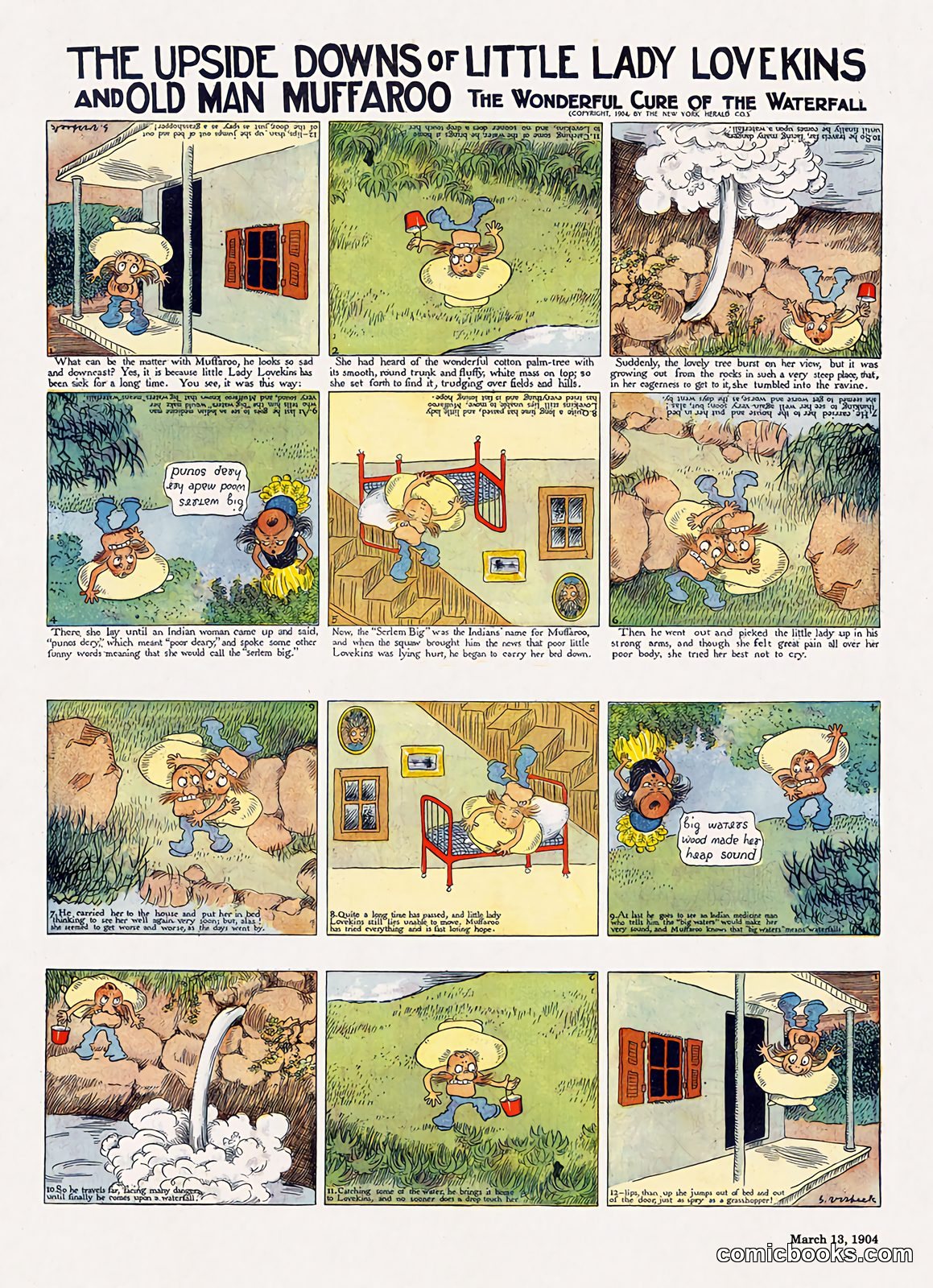
The Upside-Downs of Little Lady Lovekins
Gustave Verbeek · 1904
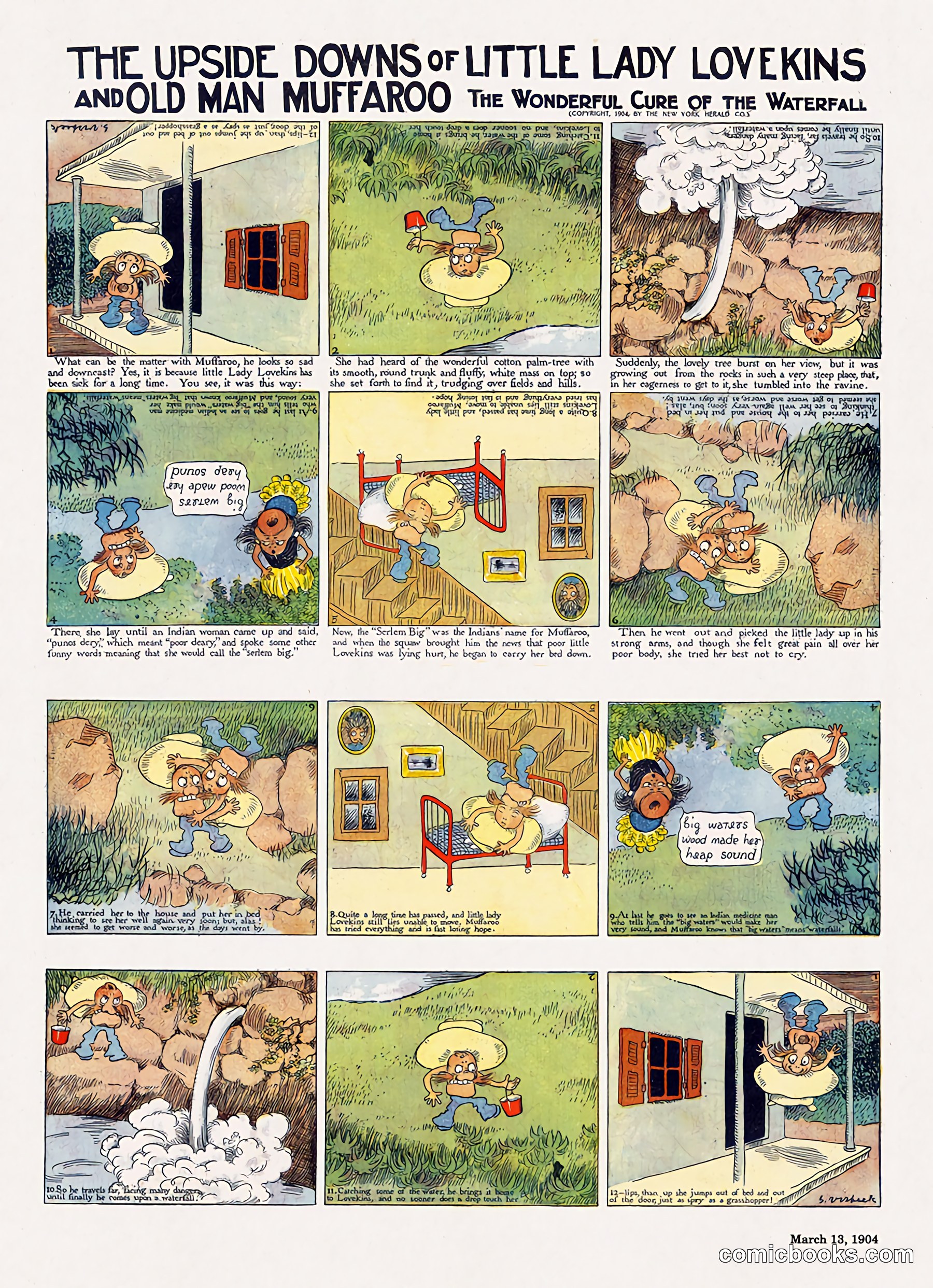
Few artists in comics history have ever attempted anything as audacious as Gustave Verbeek. Each installment of The Upside-Downs of Little Lady Lovekins and Old Man Muffaroo presents six panels telling the first half of a story — then asks the reader to physically turn the newspaper upside down and read the very same six drawings again, now flipped 180 degrees, to discover the second half. Lovekins right-side-up becomes Old Man Muffaroo inverted; a canoe becomes a great fish; the tale continues seamlessly through the rotation. It is one of the most ingenious formal experiments the medium has ever produced, and it demanded staggering discipline: every line had to read as two different pictures at once. This matters because it reveals, astonishingly early, that comics are not merely illustrated text but a visual language with rules that can be bent, folded, and turned inside out. Verbeek treated the page itself as a puzzle and a plaything. A full century before cartoonists would celebrate the comic as a designed object, he was already proving how much invention the humble Sunday page could hold. Genius, it turns out, was present at the very beginning.
Gustave Verbeek Public domain