From the exhibition
Max und Moritz — Plate 51
Wilhelm Busch · Wilhelm Busch, 1865
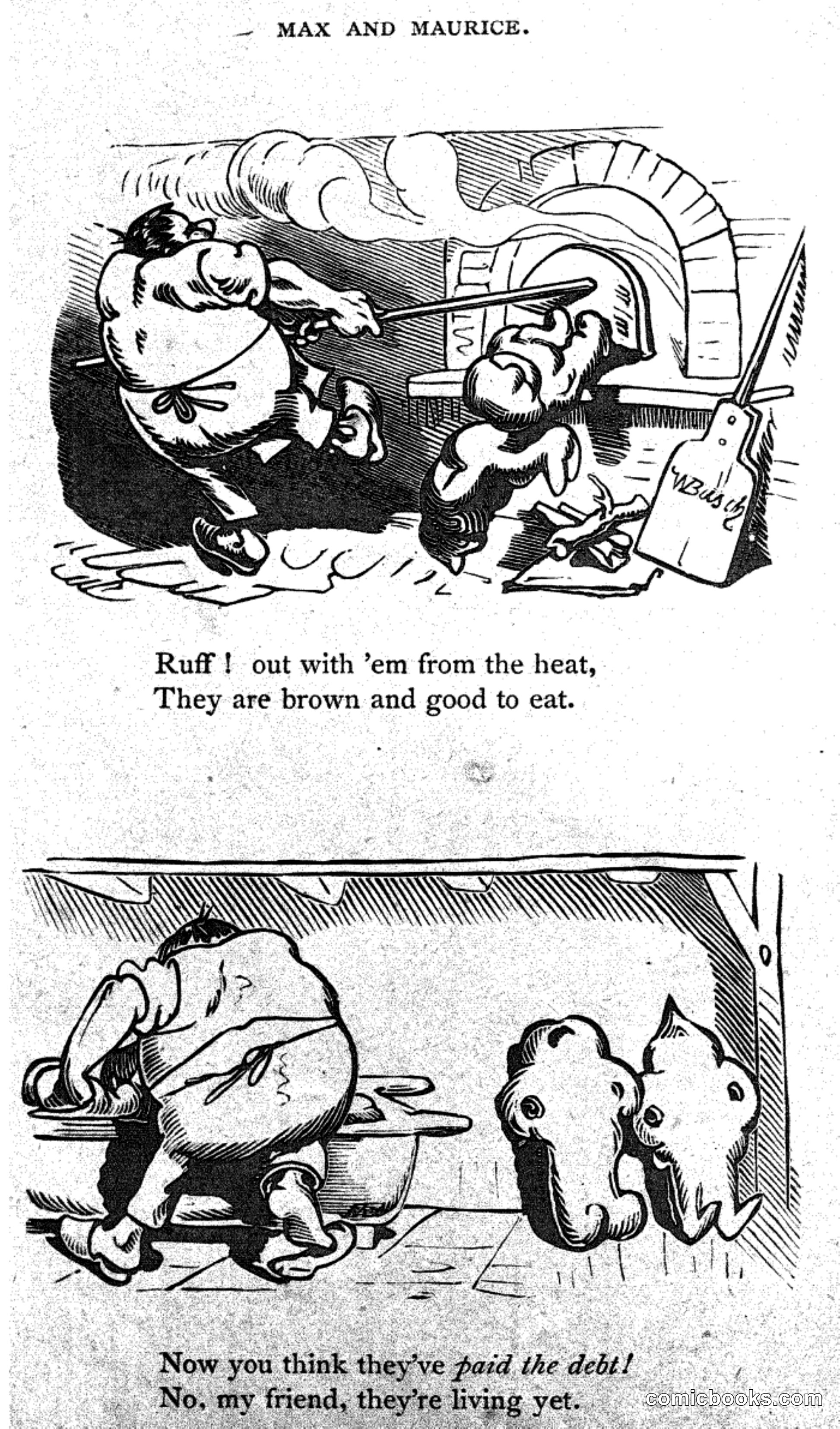
Two vignettes read top-to-bottom, each with its own rhyming couplet. Above, a rotund baker shoves two small figures into a domed bread oven with a long-handled peel; smoke billows, tools lean against the arch. Below, the same two figures — now baked into loaf-shaped lumps — lie on a flat surface, their limbs fused into doughy masses. Busch's line is economical and springy: thick contours, hatching for shadow, exaggerated rounded forms that turn bodies into objects. The vertical page movement mimics cause and effect, teaching the eye to read sequence as story. These picture-stories, predating the newspaper strip by decades, established the grammar of sequential art — panel progression, integrated text, comic timing — that later cartoonists across Europe and America would inherit directly.
Public domain, restored and presented by comicbooks.com public-domain