From the exhibition
Max und Moritz — Plate 18
Wilhelm Busch · Wilhelm Busch, 1865
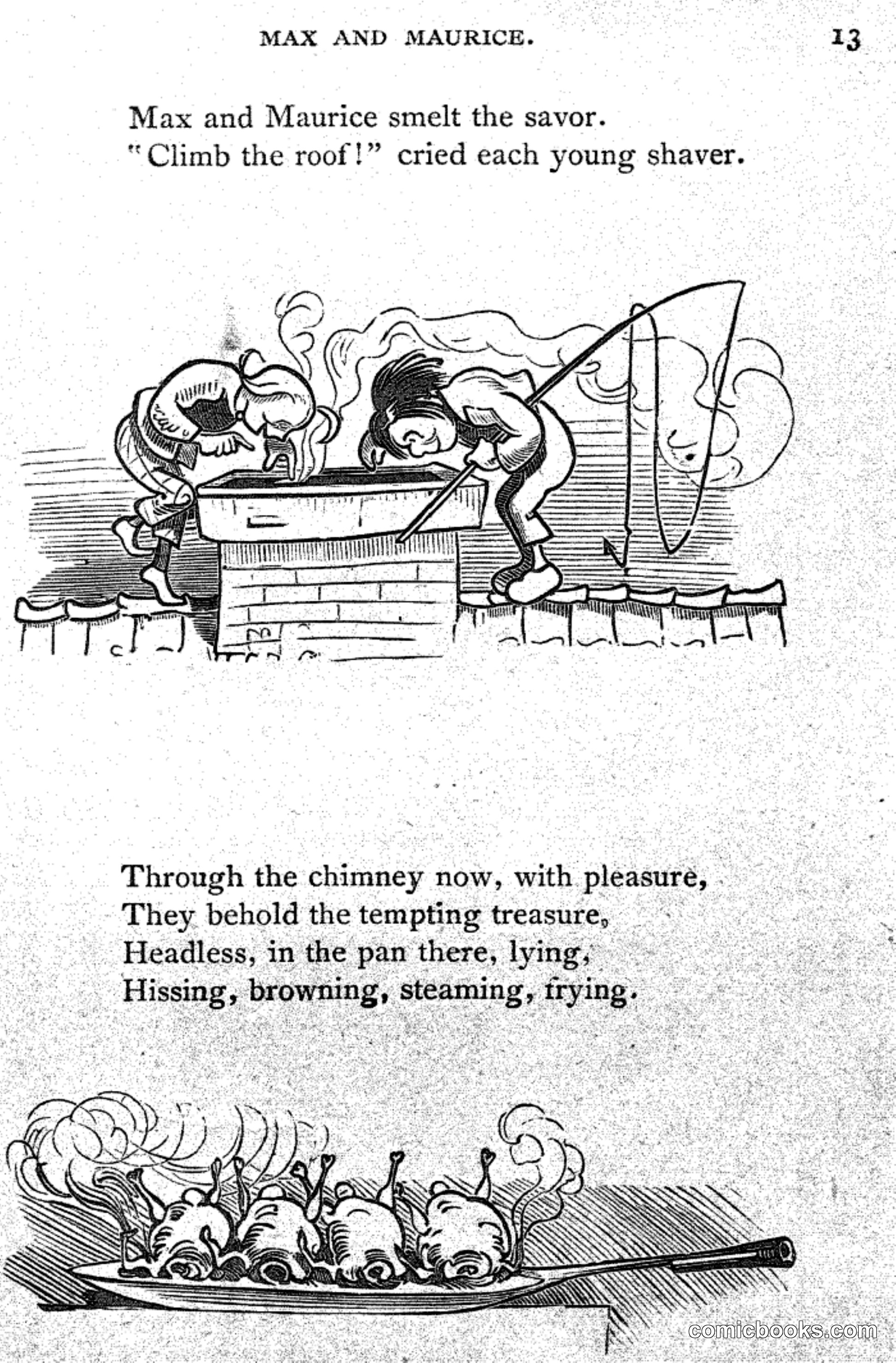
Two vignettes, read top to bottom, show the mischief-makers Max and Maurice on a rooftop: in the upper panel both boys crouch over a chimney, one wielding a long-handled net, peering down through the smoke toward the kitchen below. The drawing is spare pen-and-ink crosshatching, figures exaggerated into rubbery near-caricature, movement implied by leaning postures and billowing smoke lines. Below, the quarry is revealed — headless fowl sizzling in a long-handled pan, surrounded by steam curls. The accompanying verse locks image and text into a single unit, each reinforcing the other — exactly the grammar the newspaper comic strip would later inherit. Busch's *Max und Moritz* is among the earliest picture-stories to treat sequential panels as a narrative engine rather than mere illustration, directly influencing Rudolph Dirks's *Katzenjammer Kids* (1897) and, through it, the American comic strip tradition.
Public domain, restored and presented by comicbooks.com public-domain