From the exhibition
Max und Moritz — Trick First (Plate 9 of 59)
Wilhelm Busch · Wilhelm Busch, 1865
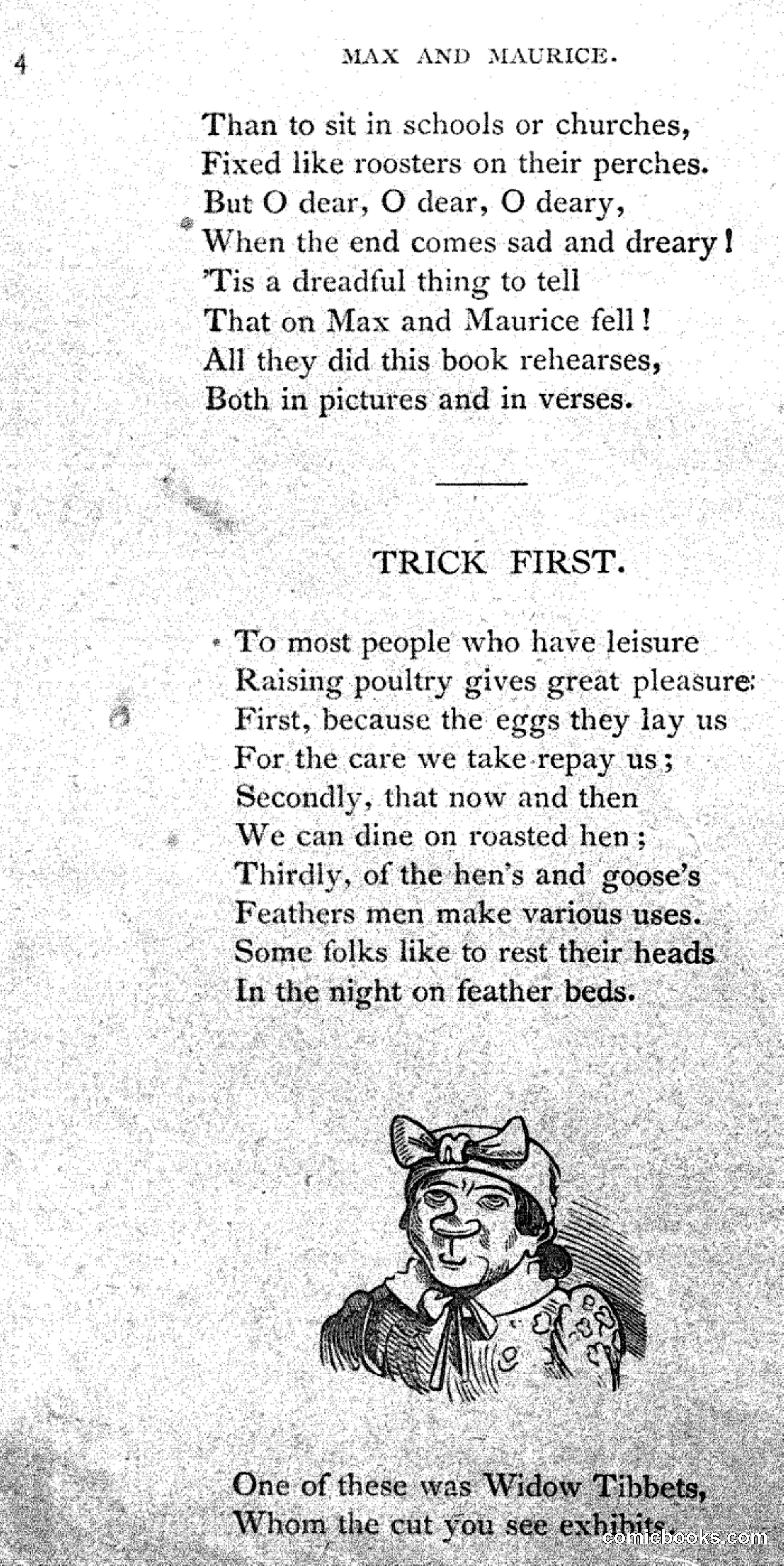
A single page from Wilhelm Busch's *Max und Moritz* opens mid-narrative with a block of rhyming verse above a compact woodcut portrait of Widow Tibbets — a stout, bonneted woman rendered in Busch's characteristically economical cross-hatching, her expression set with grim dignity. The text introduces her as a keeper of poultry, listing eggs, roasted hen, and feather beds as the pleasures chickens provide — pleasures the two boys are about to exploit. Busch's method is central to comics history: verse and image share equal narrative load, neither redundant. This interplay of printed stanza and sequential vignette, published in Munich in 1865, directly influenced Rudolph Dirks when he created *The Katzenjammer Kids* in 1897, threading the DNA of German picture-stories straight into the American newspaper strip.
Public domain, restored and presented by comicbooks.com public-domain