From the exhibition
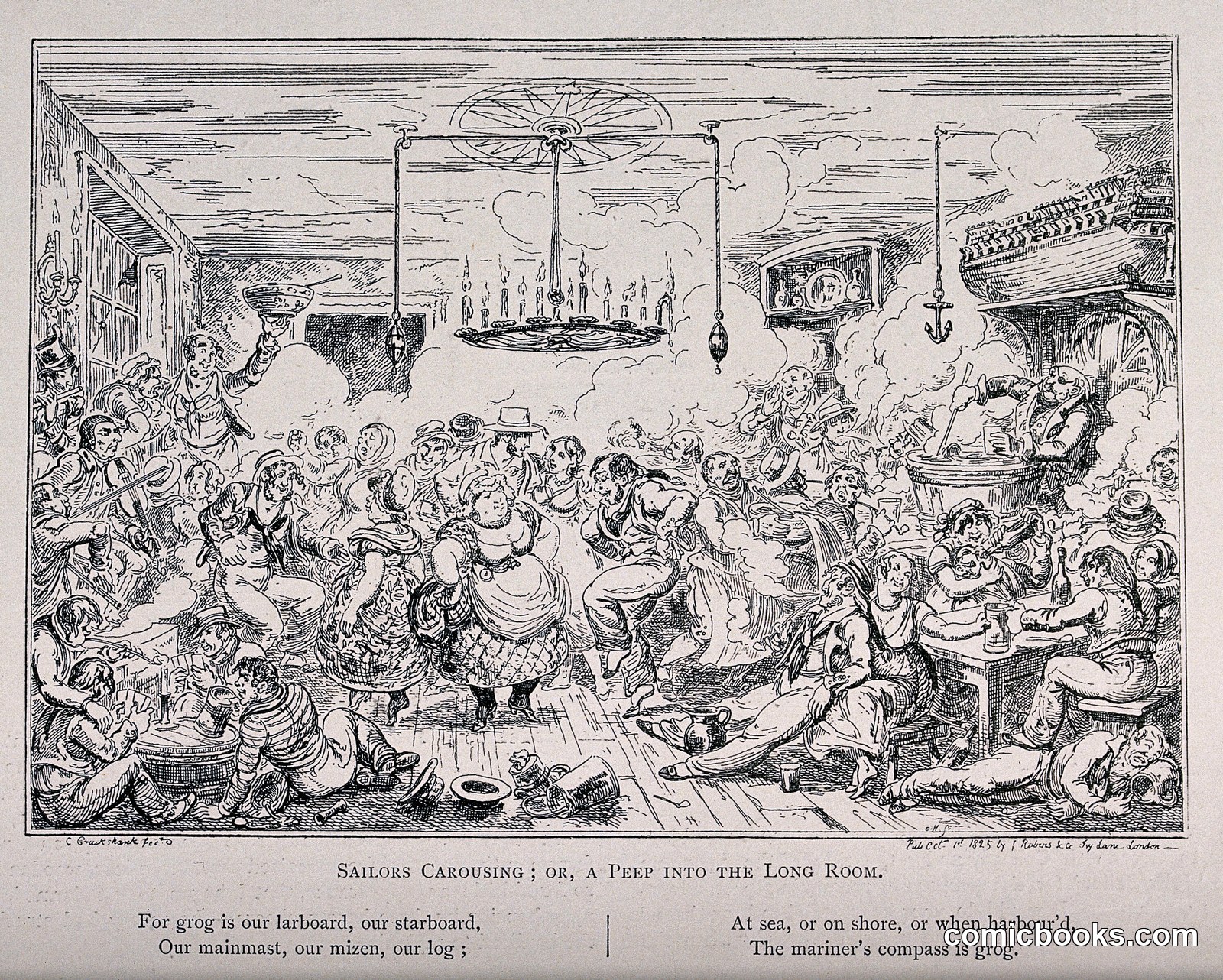
Sailors Carousing; or, a Peep into the Long Room
http://data.europeana.eu/agent/63272 · c. 1825, after George Cruikshank (1792–1878)
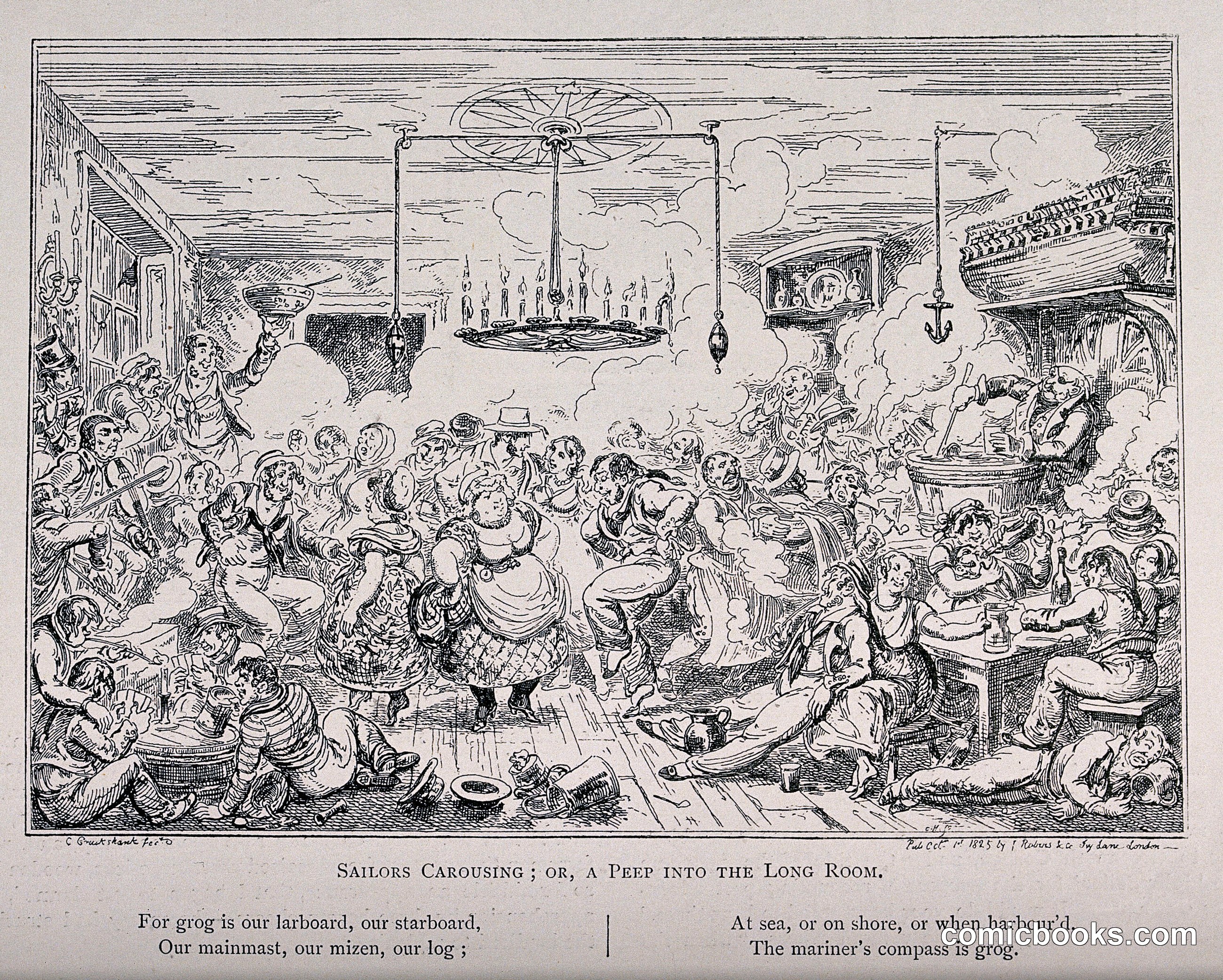
A riotous shore-tavern erupts across this etched plate: sailors dance, brawl, vomit, and grope women of the working poor while a peg-legged veteran holds court at right, presumably reliving Trafalgar-era glory. Cruikshank's line work—cross-hatched smoke, grotesquely swollen faces, rubbery limbs—descends directly from Rowlandson's low-life street scenes and Gillray's bodily excess. The verse caption below confirms grog as the sailors' true compass. Class caricature operates fully here: the lower-deck tar is rendered bestial, broad, and incapable of dignity, a stock figure of Georgian print culture that amused middling audiences at their social inferiors' expense. Such densely populated single-image narrative sheets, alongside German *Bilderbogen* and French caricature journals, taught sequential comedy its grammar—panel chaos, comic timing, exaggerated physiognomy—feeding directly into the nineteenth-century illustrated press and eventually the comic strip.
Public domain, restored and presented by comicbooks.com http://creativecommons.org/licenses/by/4.0/