From the exhibition
De lachende Momus onder de Actionisten (The Laughing Momus Among the Stockholders)
· 1720
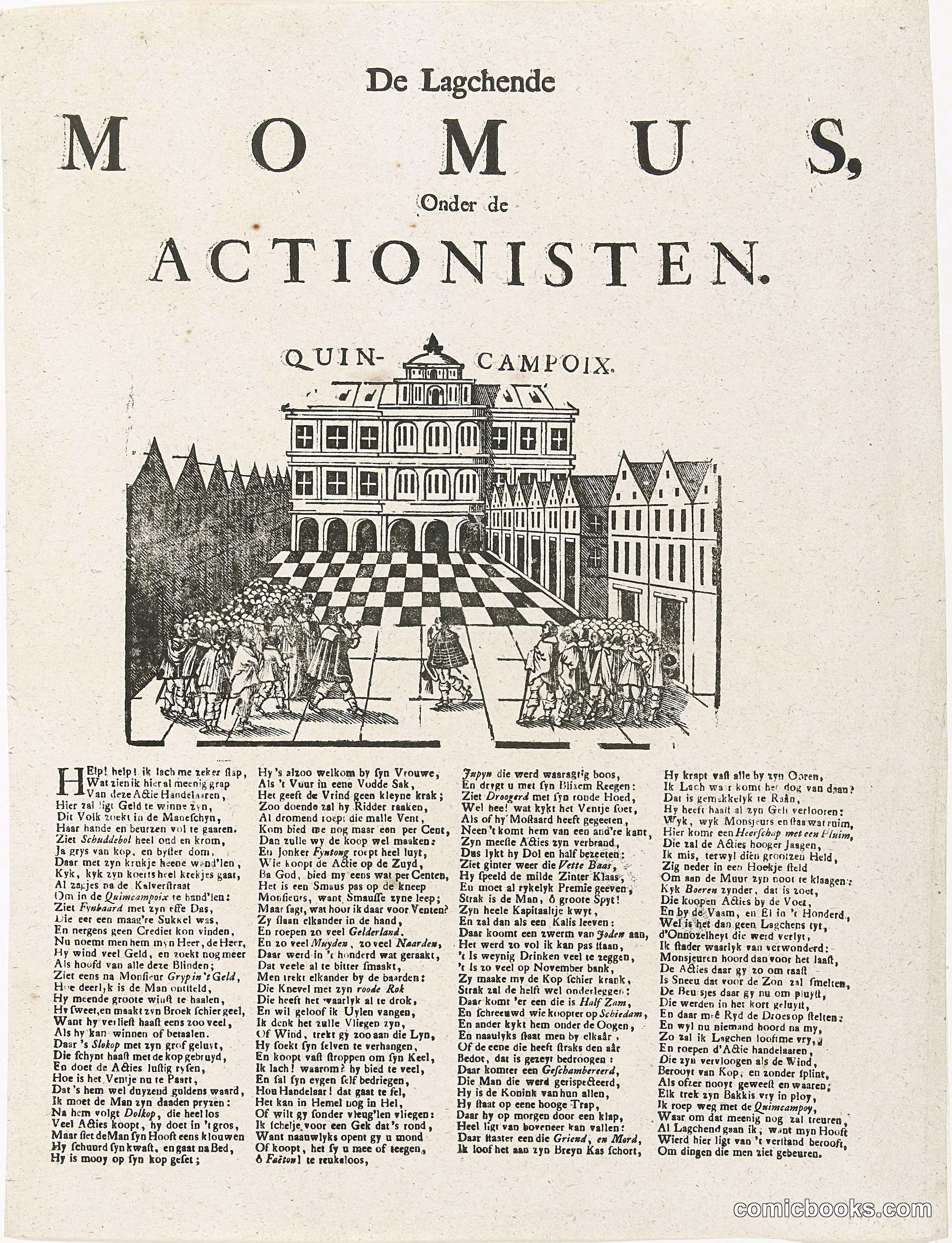
This Dutch woodcut satirizes the financial mania of the early 18th century, depicting a chaotic marketplace before an ornate building labeled Quin-Campoix. Crowds of merchants and speculators mill about a checkered plaza while Momus, the classical god of mockery, presides over the folly. The print belongs to the tradition of economic satire inherited from Hogarth and perfected by later printmakers: it uses dense, legible detail to expose human greed and delusion. Woodcut allowed rapid, cheap distribution across the Low Countries. Such satirical prints educated and entertained the public about financial bubbles and market corruption—a moral function that would animate political caricature through the nineteenth century and influence the visual language of modern comics.
Public domain, restored and presented by comicbooks.com http://creativecommons.org/publicdomain/mark/1.0/