From the exhibition
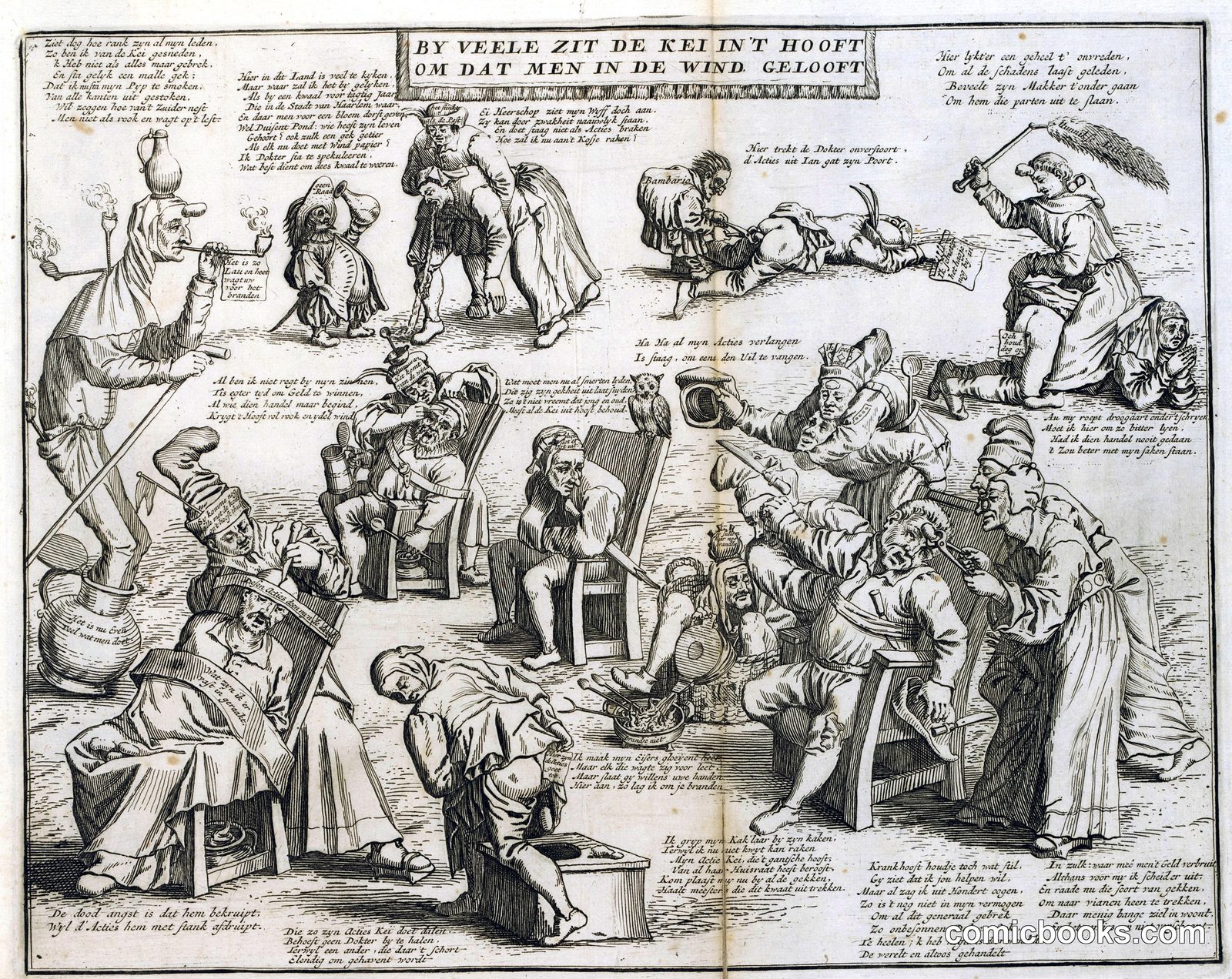
De keisnijder van 1720 (The Stone-Cutter of 1720)
· 1720
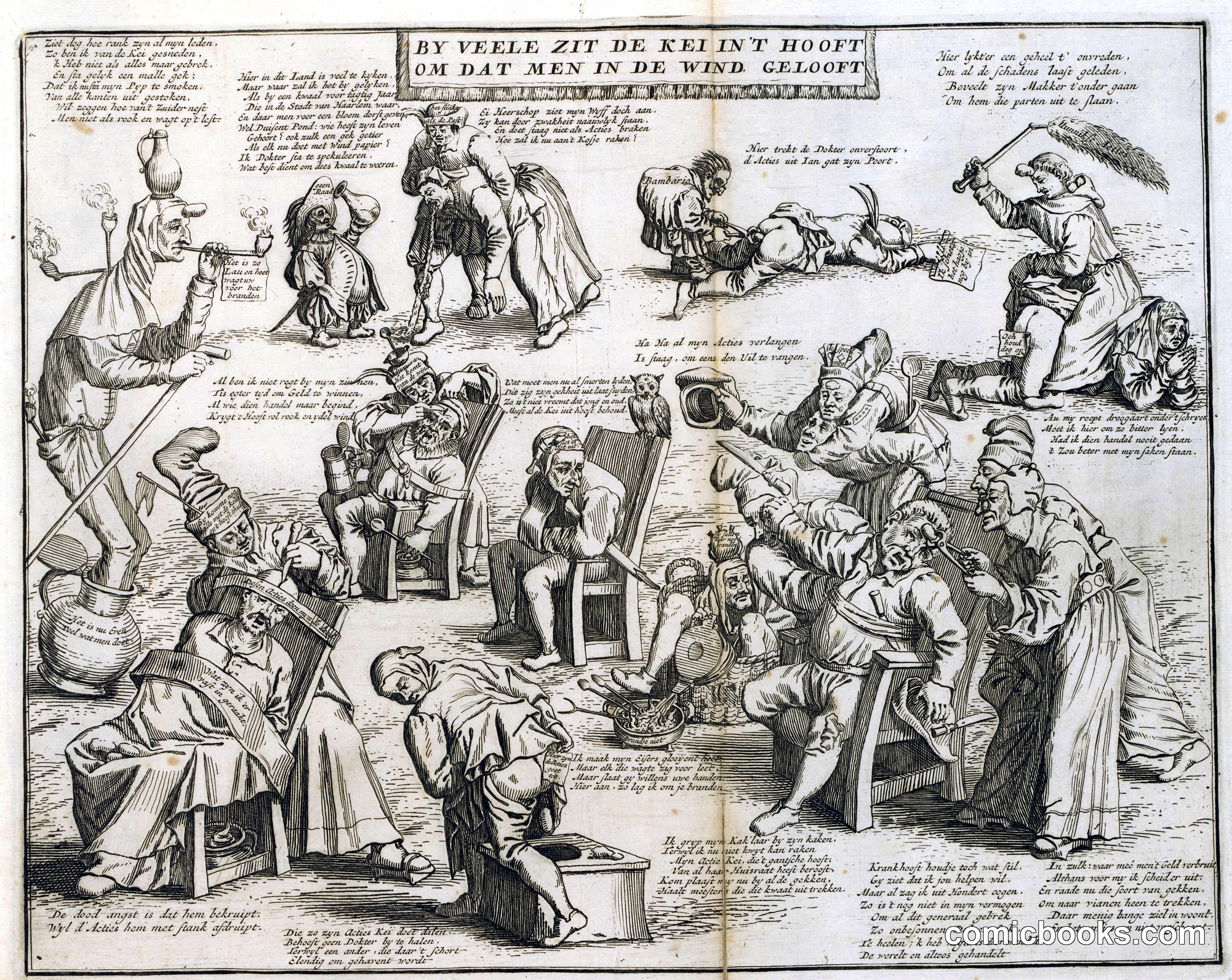
This Dutch etching satirizes surgical charlatans and quacks operating in public spaces. Multiple scenes depict a charlatan "stone-cutter" extracting stones from patients' heads while onlookers—wealthy, poor, clergy, and nobility—watch in credulity or distress. The composition exemplifies Northern European print satire: dense narrative panels with accompanying verse, moral instruction embedded in visual chaos. The work belongs to the tradition of Bruegel-inspired crowd scenes and anticipates Hogarth's sequential moral narratives. Such prints mocked medical fraud, superstition, and social folly across class lines, using exaggerated bodily caricature to shame both practitioner and dupe. The etching's crowded format and moralizing intent established conventions the modern comic strip would inherit: multiple vignettes, legible grotesquerie, social commentary through visual excess.
Public domain, restored and presented by comicbooks.com http://creativecommons.org/publicdomain/mark/1.0/