From the exhibition
Max und Moritz
Wilhelm Busch · 1865
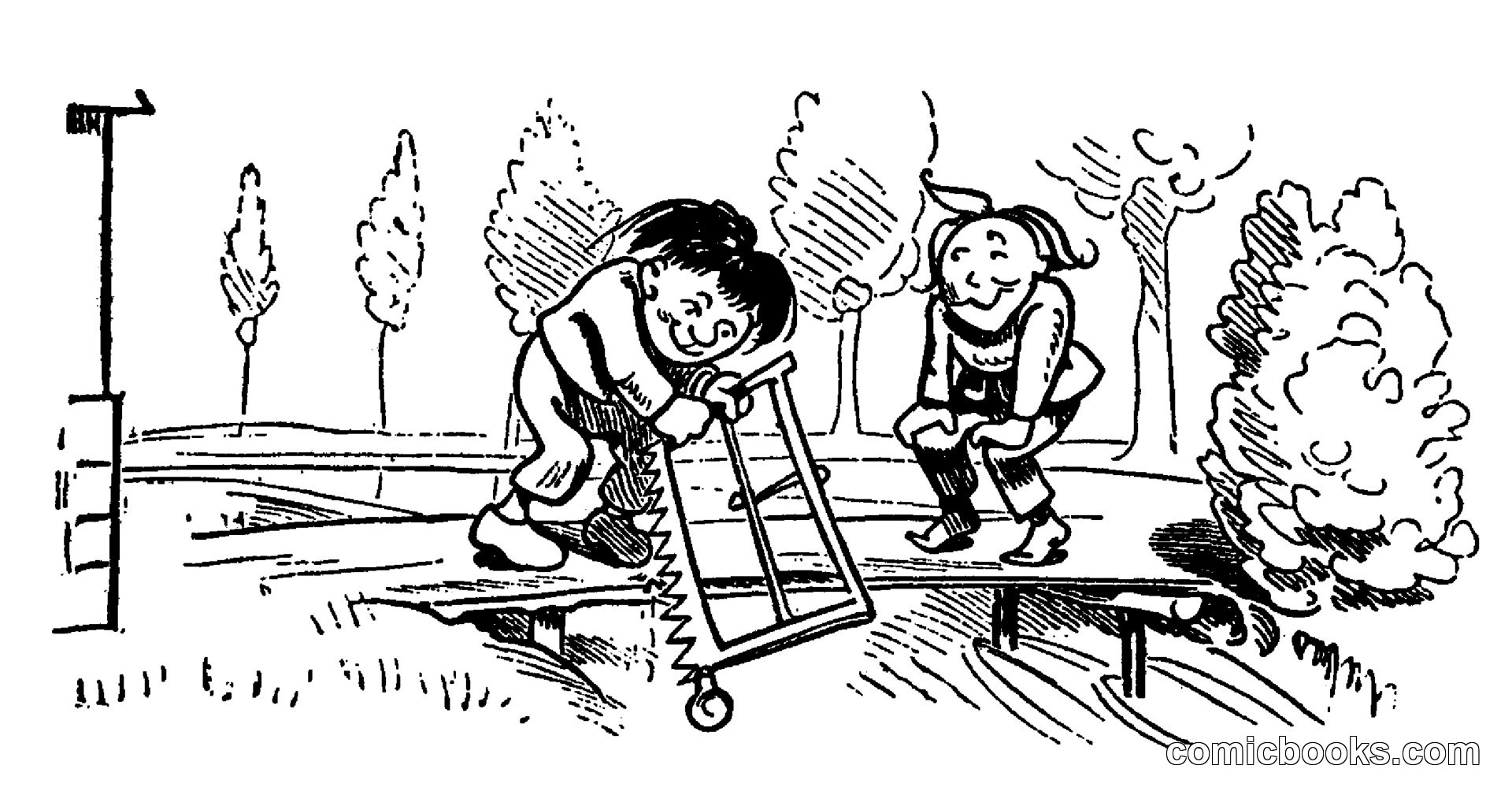
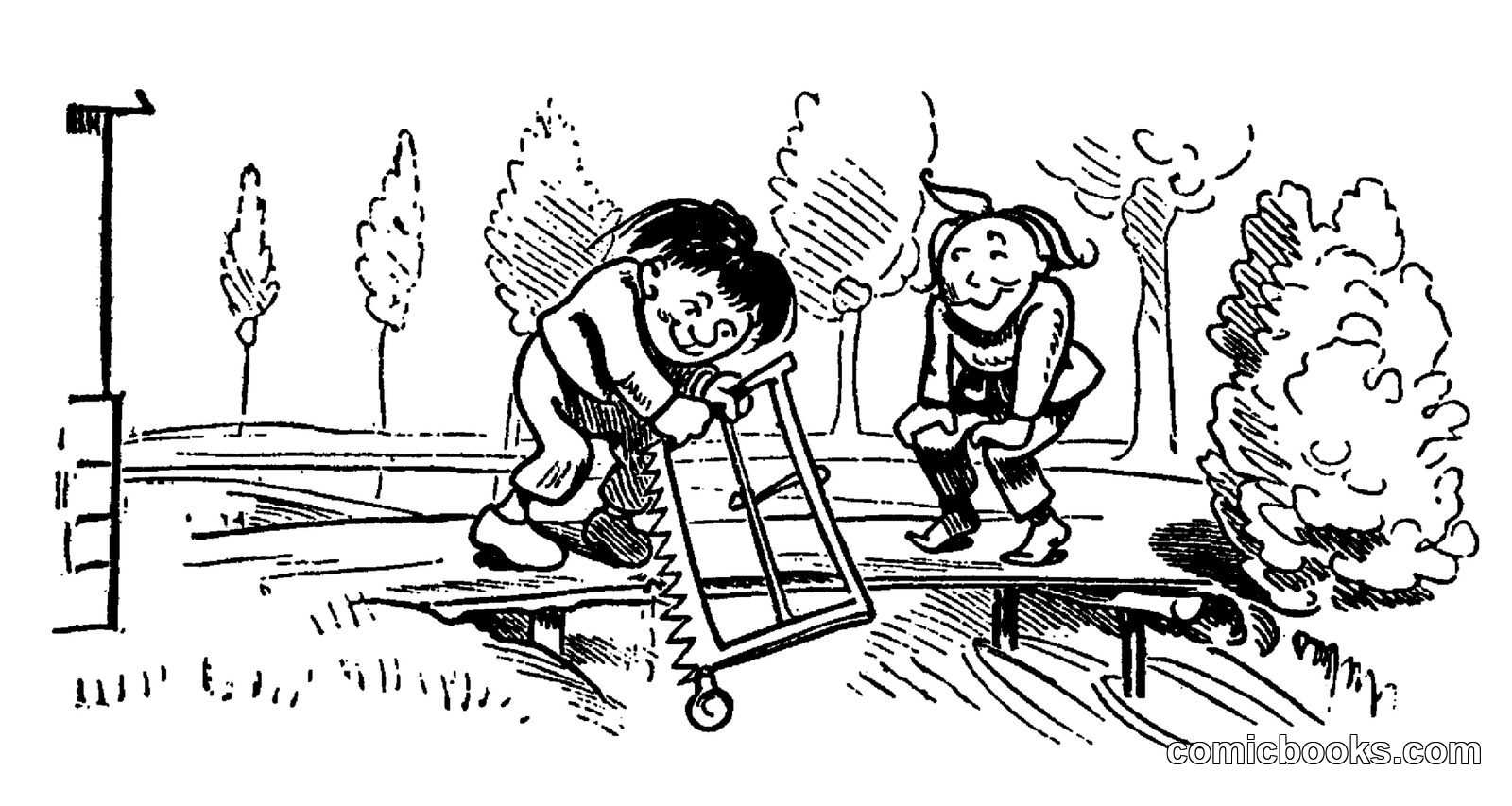
Wilhelm Busch's Max und Moritz (1865) tells, in rhymed German verse paired with his own brisk drawings, the story of two incorrigible boys and the seven pranks they inflict on the adults of their village — tormenting a widow, a tailor, a teacher, and a baker before their mischief brings a grim comeuppance at a mill, where they are ground up and eaten by fowl. Busch's economy of line and perfect timing between text and picture made the book an enormous, lasting success and a cornerstone of German popular culture. Its importance to comics is direct and well documented: in 1897 the cartoonist Rudolph Dirks, working for the American press, created The Katzenjammer Kids as an explicit descendant of Busch's terrible twosome, transplanting the pair of scheming boys into the color Sunday newspaper. That strip became one of the longest-running comics ever published, meaning a line of ancestry runs straight from this small German picture-book to the American funny pages. Max und Moritz stands as the great bridge between the European picture-story and the comic strip proper.
Wilhelm Busch Public domain