From the exhibition
Comic Strip Page
· Early-to-mid 20th century
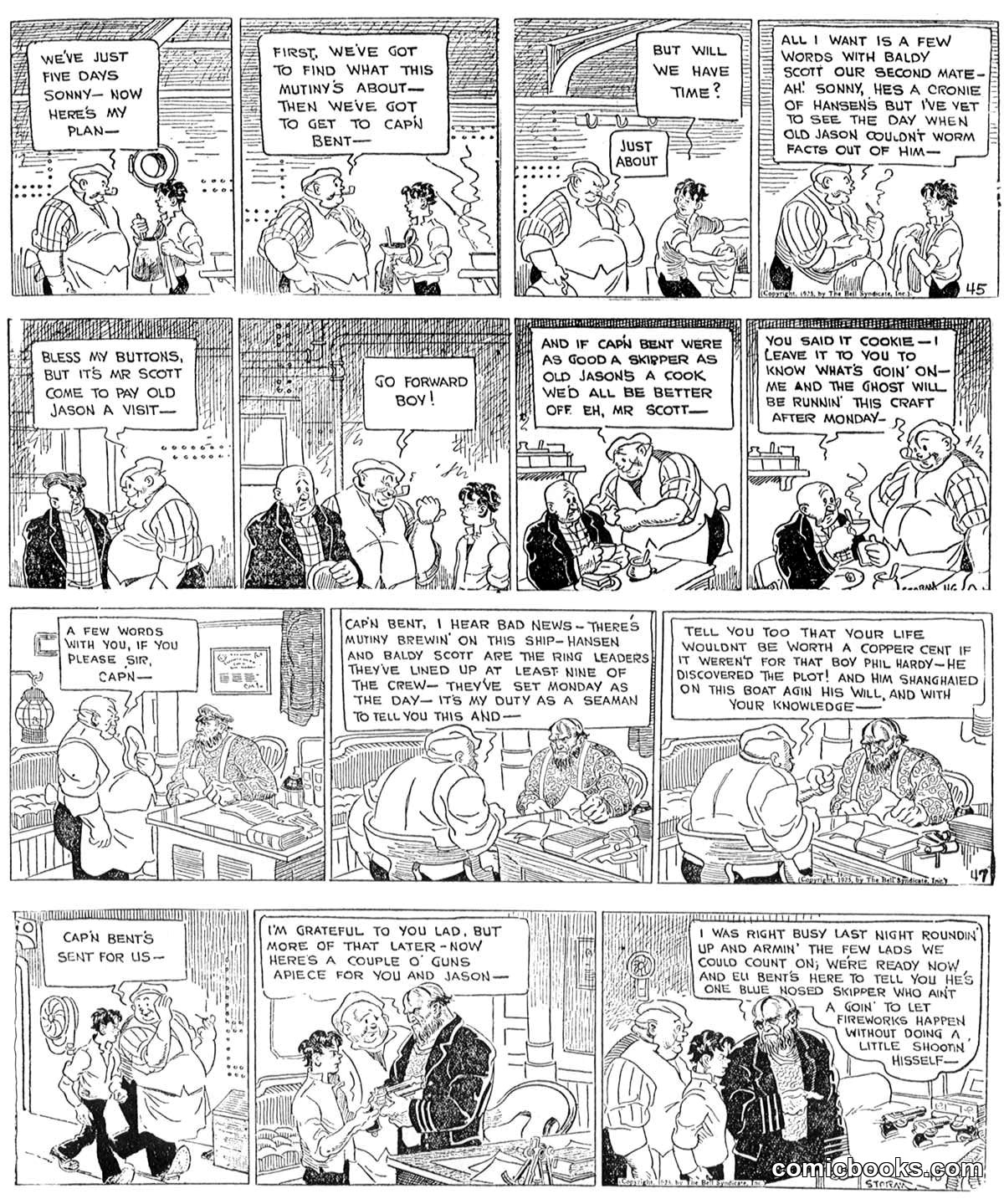
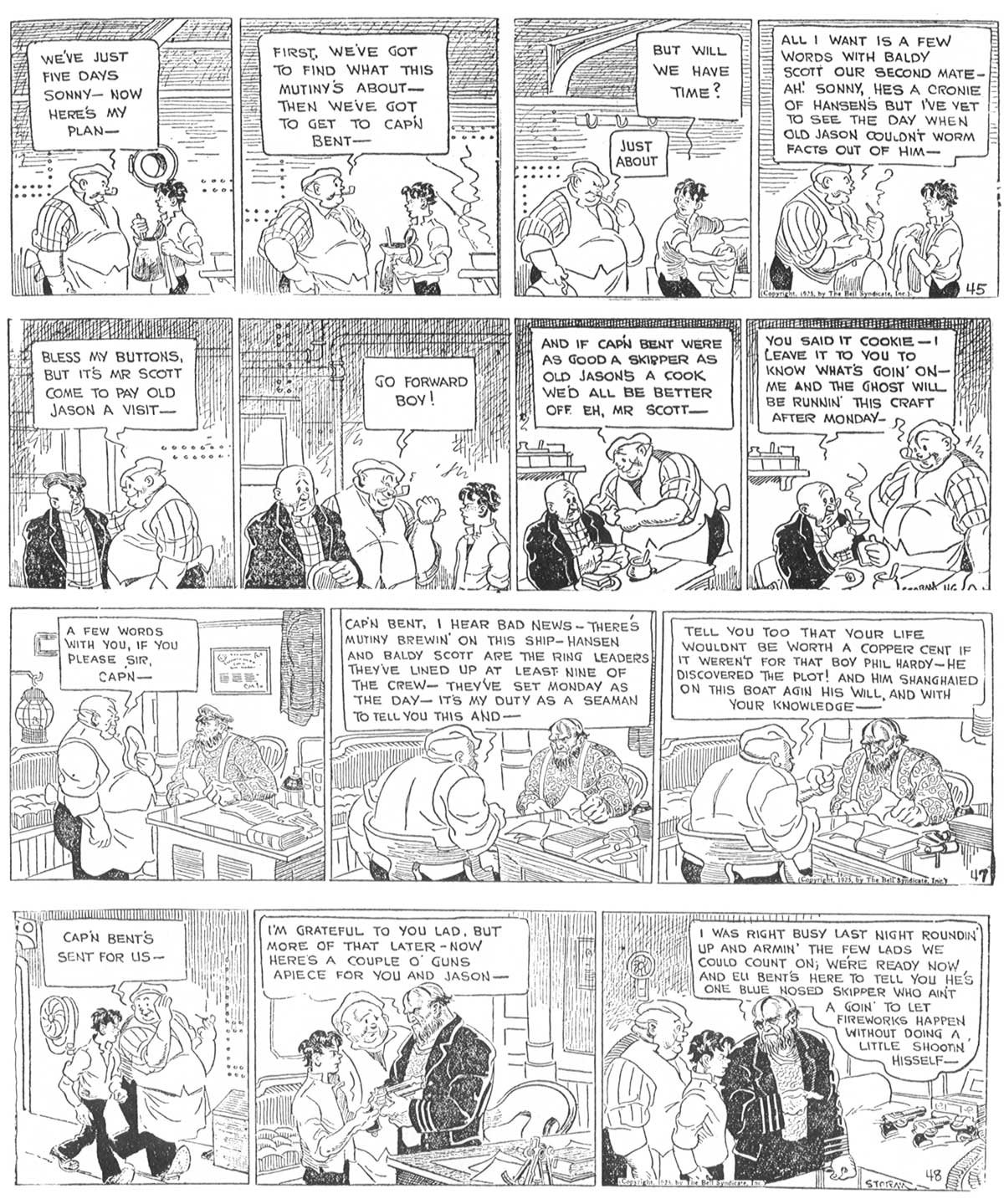
This newspaper comic strip demonstrates the visual language that shaped sequential art: rectangular panels arranged in regular grid, dialogue contained in speech balloons, recurring character types established through costume and physique, and narrative flow built across multiple tiers. The artist employs crosshatching for depth and texture, with clear line work defining caricatured figures. The plot—a scheme involving a captain, a cook, and nautical adventure—unfolds through economical dialogue and facial expression, relying on readers' familiarity with stock maritime characters. Such Sunday pages and daily strips were the primary venue where comic storytelling conventions developed, predating and directly influencing the comic book industry that emerged in the 1930s and '40s. These serialized strips trained audiences in reading sequential panels as continuous narrative.
Public domain, restored and presented by comicbooks.com public-domain