From the exhibition
Nobody Loves a Fat Man
· 1909
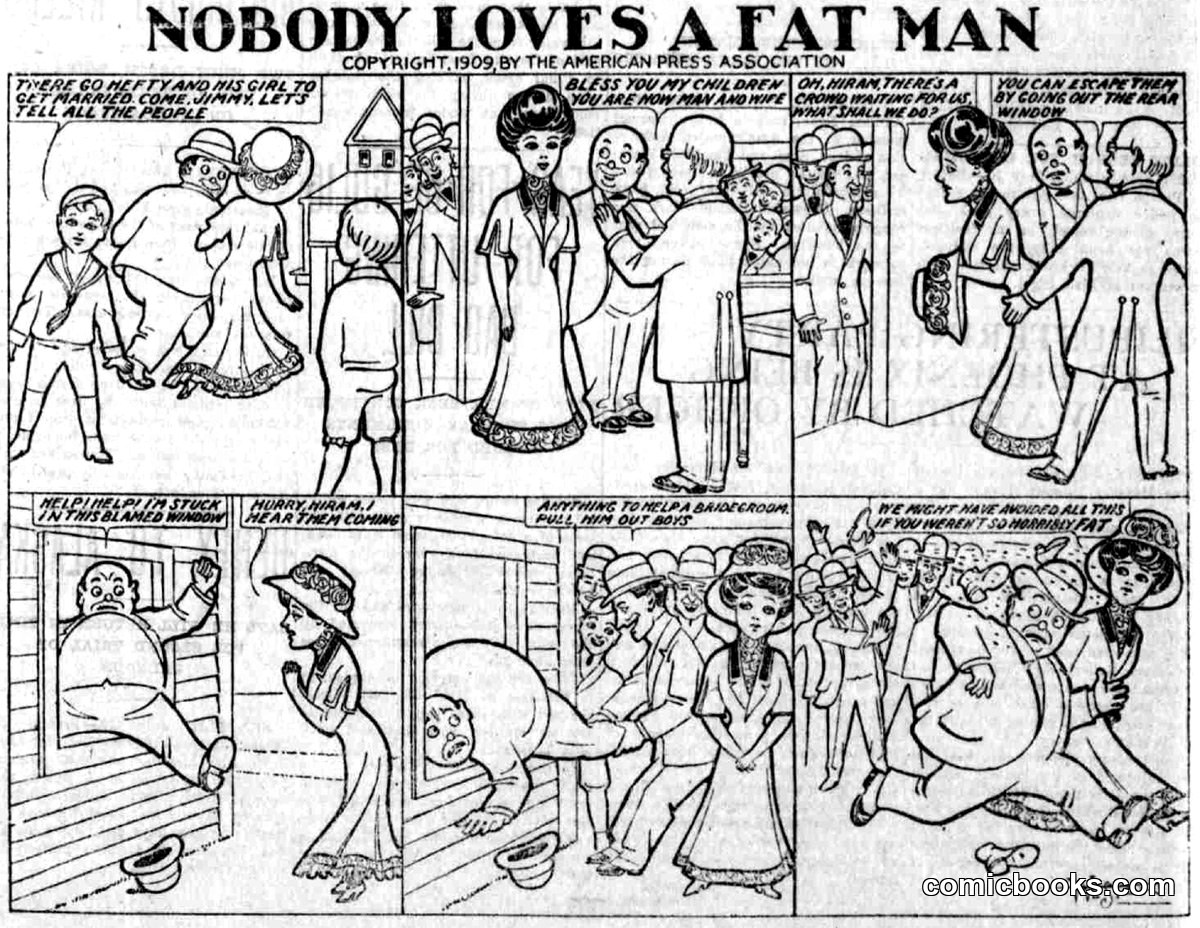
This Sunday newspaper comic strip follows a rotund man through a series of social humiliations. Rejected by his girlfriend's family, he attempts to hide his bulk behind doors and furniture, only to be discovered and mocked by an assembled crowd. The strip employs the visual conventions that defined early comics: sequential panels with speech balloons, exaggerated character expressions, and physical comedy escalating toward a punchline. By 1909, such strips were standard fare in American newspapers, establishing the visual grammar—panel borders, word placement, staging—that would become foundational to comic books. The artist uses white space and composition to guide readers through the narrative, while grotesque body types and slapstick humor drove circulation among working-class audiences.
Public domain, restored and presented by comicbooks.com public-domain
