From the exhibition
Alphonse and Gaston
Frederick Burr Opper · 1903
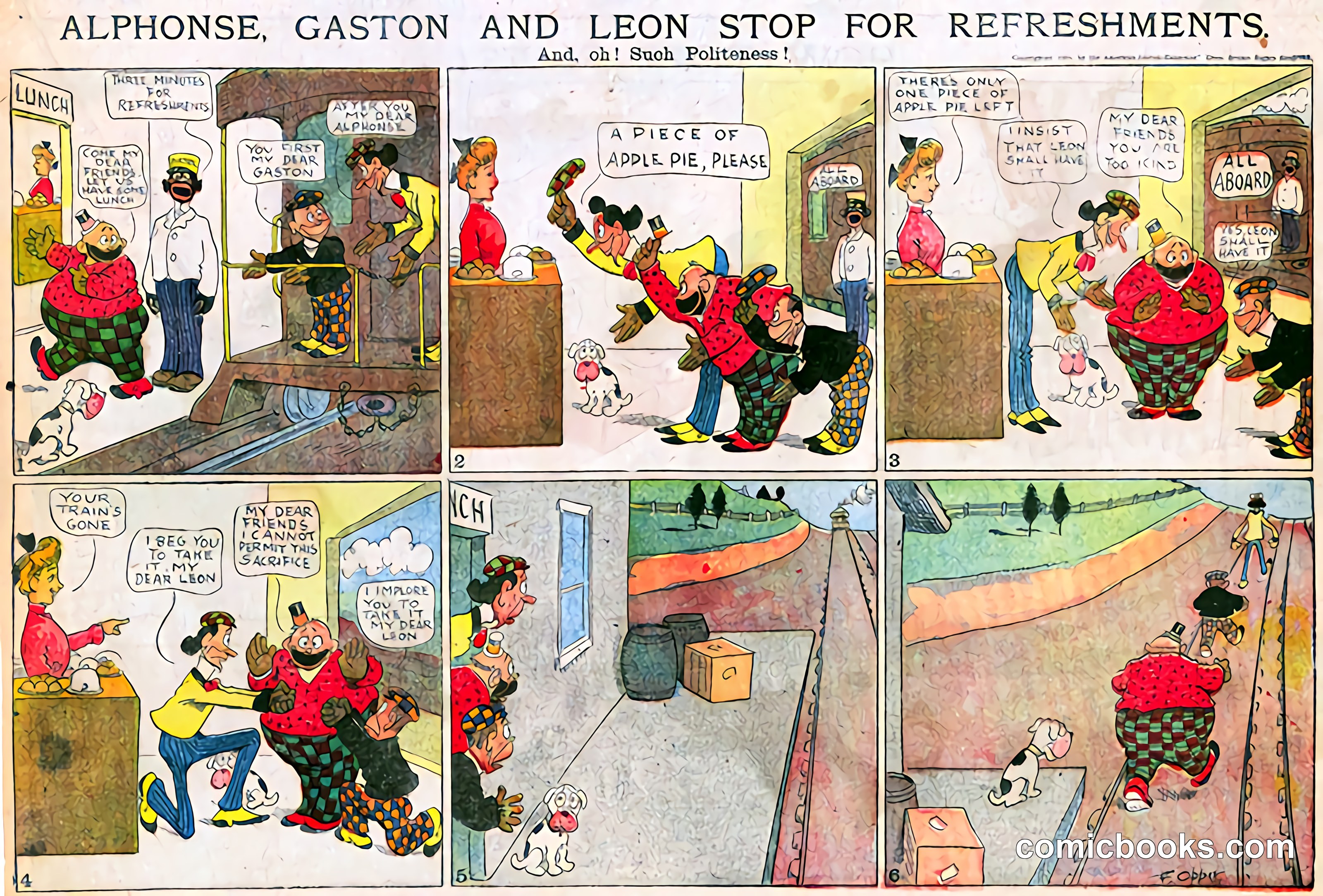
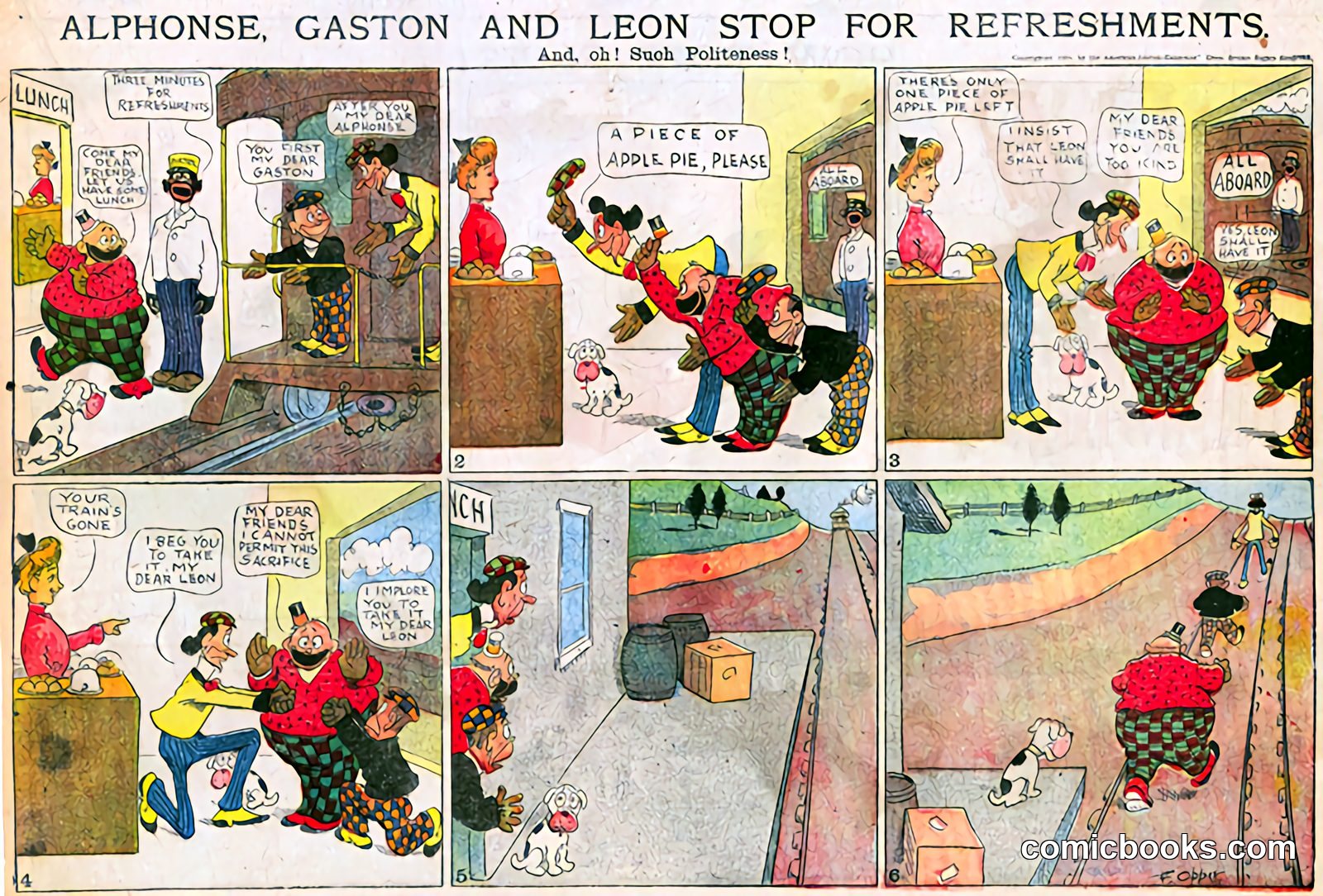
Two Frenchmen bow at a doorway, each insisting the other step through first — "After you, my dear Alphonse!" "No, after YOU, Gaston!" — while the world burns, floods, or collapses around them, forever unable to move because neither will stop being polite. Frederick Burr Opper, a seasoned veteran of the humor magazine Puck, gave American readers a comic idea so sharp that it outlived the strip itself. To this day, "an Alphonse and Gaston routine" describes any exchange of exaggerated deference that grinds everything to a halt. That linguistic afterlife is exactly why the strip matters: it shows the early newspaper cartoon becoming a genuine engine of popular culture, minting phrases and characters that seeped into everyday speech. Opper understood that a comic could run on a single, endlessly repeatable premise, and that repetition — far from tiring readers — was the joke's fuel. Here we see the young art form flexing real cultural muscle, shaping how people spoke and thought. The comic character had become a shared reference, a shorthand everyone understood. It is a small doorway, but a great deal of comics history bows its way through it.
Frederick Burr Opper Public domain